Project Overview
A medium-sized home office and content production studio in the Don Mueang area of Bangkok required a network infrastructure upgrade to support high-bandwidth workflows, including high-resolution video production, centralized NAS storage, collaborative editing, and live streaming operations.
While the existing network was suitable for general office use, increasing data volumes and a growing number of connected devices exposed the limitations of the previous Gigabit switching infrastructure and wireless access points. Large file transfers, simultaneous NAS access, and multiple streaming activities created bottlenecks within the local network.
The engineering team at SyncTech Solution redesigned the environment using a TP-Link Omada Wi-Fi 7 solution with a Multi-Gigabit switching infrastructure. The new architecture combines Wi-Fi 7 access points, 2.5GbE PoE+ switching, 10G SFP+ uplinks, and centralized management to provide a scalable platform for demanding production workflows.
Customer Confidentiality
This project was successfully delivered by the engineering team at SyncTech Solution. At the customer's request, the organization name, logo, site photographs, and any information that could identify the customer are not disclosed.
This case study focuses exclusively on the engineering approach, project scope, solution architecture, and implementation methodology that may be publicly shared without exposing confidential customer information.
Project Scope
Existing Infrastructure Assessment
The existing network infrastructure, wireless coverage, production areas, editing rooms, streaming studio, device density, and traffic patterns were assessed to identify operational bottlenecks.
Network Bottleneck Analysis
The engineering team evaluated switching capacity, wireless performance, uplink bandwidth, and client behavior to distinguish local network limitations from Internet service constraints.
Multi-Gigabit Network Design
A new architecture was designed around 2.5GbE connectivity between access points and switches, with 10G SFP+ uplinks prepared for aggregation and future expansion.
Infrastructure Deployment
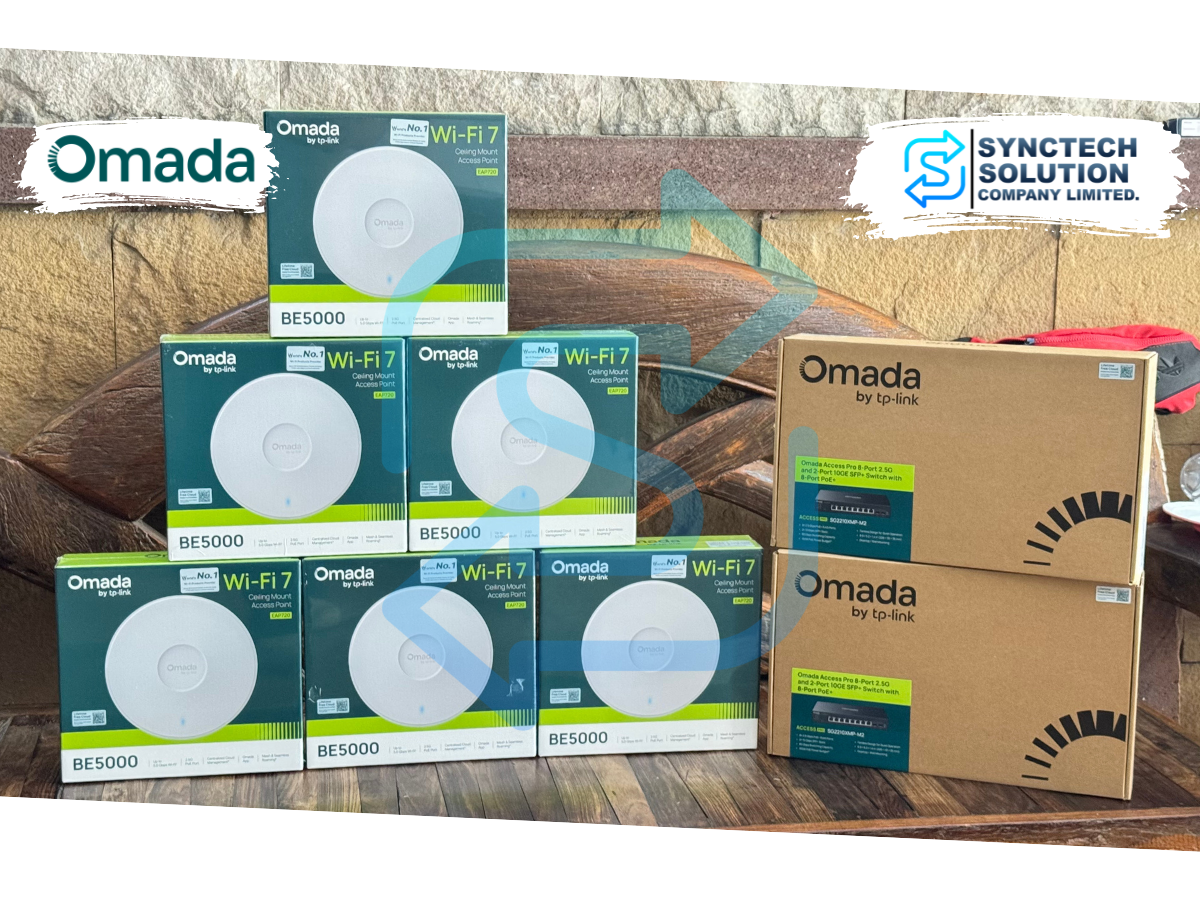
TP-Link Omada EAP720 Wi-Fi 7 access points and SG2210XMP-M2 managed PoE+ switches were deployed across open workspaces, editing rooms, and live streaming areas.
Configuration and Optimization
The deployment included wireless optimization, roaming configuration, SSID planning, radio tuning, Band Steering, Multi-Link Operation (where supported), and centralized Omada management.
Validation and Handover
The completed system was validated for wireless coverage, client connectivity, NAS access, large file transfers, roaming behavior, and production workflow readiness before project handover.
Services Delivered
- Design: Multi-Gigabit network architecture, wireless design, PoE infrastructure, and uplink planning.
- Installation: Deployment of Wi-Fi 7 access points and managed PoE+ switches.
- Configuration: Wireless optimization, roaming, VLANs where applicable, Omada management, and performance tuning.
- Migration: Transition from the existing wireless infrastructure to the new enterprise platform.
- Testing: Validation of client connectivity, NAS access, roaming, wireless coverage, and production workflows.
- Documentation: Delivery of configuration records, equipment documentation, and project handover materials.
Solution Architecture
Upgrading from Gigabit to Multi-Gigabit Infrastructure
The previous Gigabit switching layer limited the available bandwidth for modern wireless access points. The new design introduced TP-Link SG2210XMP-M2 managed switches with 2.5GbE PoE+ ports and 10G SFP+ uplinks, providing higher-capacity connectivity between wireless infrastructure and the core network.
Wi-Fi 7 for High-Bandwidth Workloads
The project deployed TP-Link EAP720 Wi-Fi 7 access points to support demanding wireless workloads such as large media transfers, NAS access, collaborative production, and simultaneous wireless users.
Actual performance depends on client capabilities, wireless conditions, channel allocation, environmental factors, and the performance of the wired infrastructure.
Multi-Link Operation
Wi-Fi 7 introduces Multi-Link Operation (MLO), allowing supported client devices to utilize multiple wireless links within a single connection. This can improve efficiency and reduce the impact of wireless congestion when compatible client devices are used.
Zoned Switching Architecture
The switching infrastructure was divided into multiple deployment zones to simplify cable routing, optimize PoE distribution, improve maintenance, and provide flexibility for future expansion.
Centralized Management
All network devices are managed through the Omada SDN platform, providing centralized monitoring, client visibility, firmware management, configuration control, and event monitoring from a single interface.
Engineering Considerations
Deploying Wi-Fi 7 access points without upgrading the switching infrastructure would leave the wireless network constrained by Gigabit Ethernet. For this reason, the wireless and switching layers were upgraded together as part of the overall architecture.
10G uplinks were incorporated to reduce aggregation bottlenecks when multiple access points simultaneously transfer data to centralized storage or core services.
The wireless design also considered the different operational characteristics of editing rooms, production studios, and collaborative workspaces rather than applying a single coverage model throughout the building.
Business Value
- Reduces Gigabit bottlenecks within the wireless infrastructure.
- Improves readiness for large media transfers and centralized NAS workflows.
- Provides a more stable wireless environment for content production and live streaming.
- Simplifies administration through centralized Omada SDN management.
- Supports next-generation Wi-Fi 7 client devices while maintaining compatibility with existing wireless clients.
Future Scalability
The Multi-Gigabit architecture provides a solid foundation for expanding wireless coverage, increasing user capacity, adding additional access points, and integrating higher-speed uplinks without replacing the switching infrastructure in the near future.
Centralized management also simplifies future firmware maintenance, policy updates, monitoring, and lifecycle management across the entire wireless environment.
Reliable Network Infrastructure Starts with Understanding Your Workflow
SyncTech Solution provides network assessment, design, deployment, migration, testing, and support services for home offices, production studios, enterprise offices, and organizations that require reliable high-bandwidth network infrastructure.
Every solution is designed around actual business workflows, wireless requirements, switching capacity, storage infrastructure, client capabilities, and long-term scalability.
Share your business requirements with our engineering team to receive an initial recommendation for designing or upgrading your Multi-Gigabit and Wi-Fi 7 infrastructure.