Project Overview
A hotel located in Nong Prue, Bang Lamung District, Chonburi planned to modernize its internal network and Wi-Fi infrastructure to improve the Internet experience for guests, enhance service continuity, and reduce the complexity of day-to-day network administration.
The previous design relied primarily on access points installed along the hallways. Wireless signals had to pass through walls, doors, and other physical obstructions before reaching guest rooms, resulting in inconsistent signal quality in certain areas, particularly on the 5 GHz frequency band. During periods of high occupancy, the existing infrastructure also had limitations in supporting a large number of simultaneous clients and managing network resources effectively.
The engineering team at SyncTech Solution therefore redesigned the infrastructure using the TP-Link Omada SDN platform. The new architecture includes an enterprise gateway, hardware controller, in-room access points, Wi-Fi 6 access points, Multi-WAN connectivity, Captive Portal, and centralized network management tailored to the operational requirements of a hotel environment.
Customer Confidentiality
This project was successfully delivered by the engineering team at SyncTech Solution. However, the customer has not authorized the disclosure of the organization name, logo, site photographs, or any other information that could identify the customer.
This case study therefore presents only the design approach, project scope, implementation methodology, network architecture, and solution details that may be publicly disclosed, without revealing information that could affect the customer's privacy or security.
Project Scope
Assessment of the Existing Infrastructure
The team assessed the building layout, existing equipment locations, number of guest rooms, public areas, usage patterns, and limitations of the current network environment to establish the basis for the new design.
Network Architecture Design
The project included the design of the gateway architecture, wireless network, in-room Wi-Fi, high-density Wi-Fi, Multi-WAN connectivity, and centralized management platform based on user density, service areas, and hotel operating requirements.
Network Equipment Installation
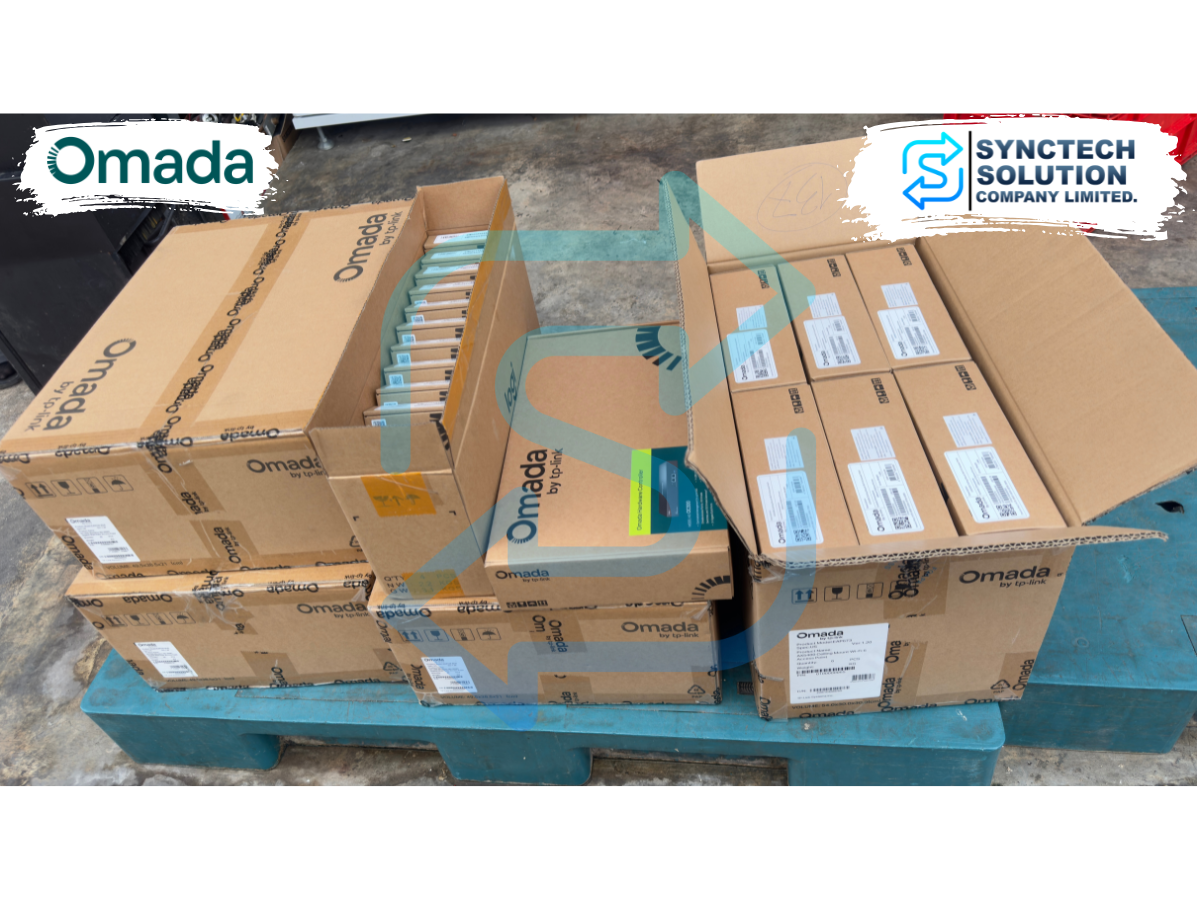
The team installed the enterprise gateway, hardware controller, wall-mounted access points inside guest rooms, and Wi-Fi 6 access points in public areas according to the approved design.
System Configuration and Optimization
The configuration included SSIDs, wireless profiles, Multi-WAN, Load Balancing, Link Backup, Captive Portal, Voucher Authentication, and per-user Rate Limits in accordance with the hotel's service policies.
Migration to the New Infrastructure
The migration from the existing network to the Omada SDN platform was planned and executed in phases to minimize disruption to hotel operations and guest connectivity.
Testing and Project Handover
The system was tested for connectivity inside guest rooms and public areas, Internet access, WAN Failover, Captive Portal operation, client connectivity, and centralized management before final handover.
Services Delivered
- Design: Network topology, wireless architecture, Multi-WAN, and centralized management design
- Installation: Installation of the gateway, controller, and access points in guest rooms and public areas
- Configuration: Configuration of wireless services, WAN connectivity, Load Balancing, Failover, Captive Portal, vouchers, and Rate Limits
- Migration: Migration from the existing network to the new architecture according to the agreed implementation plan
- Testing: Testing of coverage, client connectivity, Internet access, WAN Failover, and Captive Portal operation
- Documentation: Preparation of configuration information, equipment records, and project handover documentation within the agreed scope
Solution Design Approach
In-Room Wi-Fi for Guest Rooms
The wireless design was changed from hallway-based access point placement to an in-room deployment using TP-Link EAP235-WALL access points, with approximately one access point installed per guest room.
This approach reduces the effect of walls, doors, and distance between users and the wireless access point, resulting in more consistent signal quality inside guest rooms and more effective use of the 5 GHz frequency band.
The EAP235-WALL also provides Ethernet ports for fixed devices such as Smart TVs, IP phones, and other in-room equipment, helping reduce unnecessary wireless traffic.
Wi-Fi 6 for High-Density Areas
Public areas such as the lobby, restaurant, and other shared spaces with a high number of simultaneous users were equipped with TP-Link EAP673 Wi-Fi 6 access points to support high-density wireless usage.
Technologies such as OFDMA and MU-MIMO help access points communicate with multiple client devices more efficiently, making the design suitable for environments where smartphones, tablets, and computers are connected at the same time.
Multi-WAN and Internet Link Backup
The TP-Link Omada ER8411 was configured as the primary gateway and connected to multiple Internet links. Load Balancing was used to distribute traffic across the primary connections, while Link Backup and Automatic Failover were configured to reduce the impact when one of the connections became unavailable.
This design improves Internet service continuity. However, some active sessions may need to reconnect when traffic is moved to another link or when the public IP address changes.
Centralized Network Management
All gateways and access points are centrally managed through the TP-Link Omada OC300 Hardware Controller. This allows the administrator to monitor device status, connected users, connection quality, alerts, and network events from a single dashboard.
Centralized management reduces the complexity of operating a large number of access points and supports remote configuration, firmware updates, client monitoring, and initial troubleshooting.
Guest Wi-Fi and Captive Portal
The project included the configuration of a Captive Portal for Guest Wi-Fi. Access can be provided through usernames and passwords or voucher codes according to the hotel's service policy.
The administrator can also configure usage duration and per-user Rate Limits to distribute available Internet resources more appropriately and reduce the impact of excessive bandwidth consumption by individual users.
Engineering Rationale
The in-room Wi-Fi architecture was selected instead of relying on hallway coverage because distance and physical obstructions directly affect wireless signal quality. Placing access points closer to guests addresses these physical limitations more effectively.
Public areas have different usage patterns from guest rooms and may need to support a much higher concentration of simultaneous users. Wi-Fi 6 access points were therefore selected for these areas to provide more efficient resource management in high-density environments.
Multi-WAN connectivity and centralized management were implemented to improve service continuity, simplify operations, and allow administrators to monitor events and adjust the network from a central platform.
Business Value
- Improves the Wi-Fi experience for guests in both guest rooms and public areas
- Reduces the administrative burden of managing a large number of network devices individually
- Reduces operational risk when one of the Internet connections experiences an outage
- Provides structured Guest Wi-Fi policies and better control of network resources
- Simplifies troubleshooting, maintenance, and future system adjustments
Future Scalability
The centralized architecture allows the hotel to add access points, expand service areas, create additional SSIDs, adjust Guest Wi-Fi policies, or add Internet connections without redesigning the entire network.
The Omada Controller also enables consistent management of firmware, configuration, clients, and events across all managed devices, supporting long-term operation and maintenance.
Reliable IT Infrastructure Starts with Understanding Your Business
SyncTech Solution provides network assessment, design, installation, migration, testing, and support services for hotels, resorts, apartments, office buildings, and enterprise organizations. Each solution is developed based on the building layout, number of rooms, service areas, user density, Internet connectivity, and management requirements.
Our engineering team focuses on designing practical infrastructure that can be managed effectively over the long term and scaled to support future business growth.
Share your requirements with our engineering team to receive an initial recommendation for designing or modernizing your organization's network infrastructure.