
Technology newsroom
SpaceXAI Partners with Nvidia! Adopts Latest Vera CPU to Power Grok AI On Earth and In Space 🚀
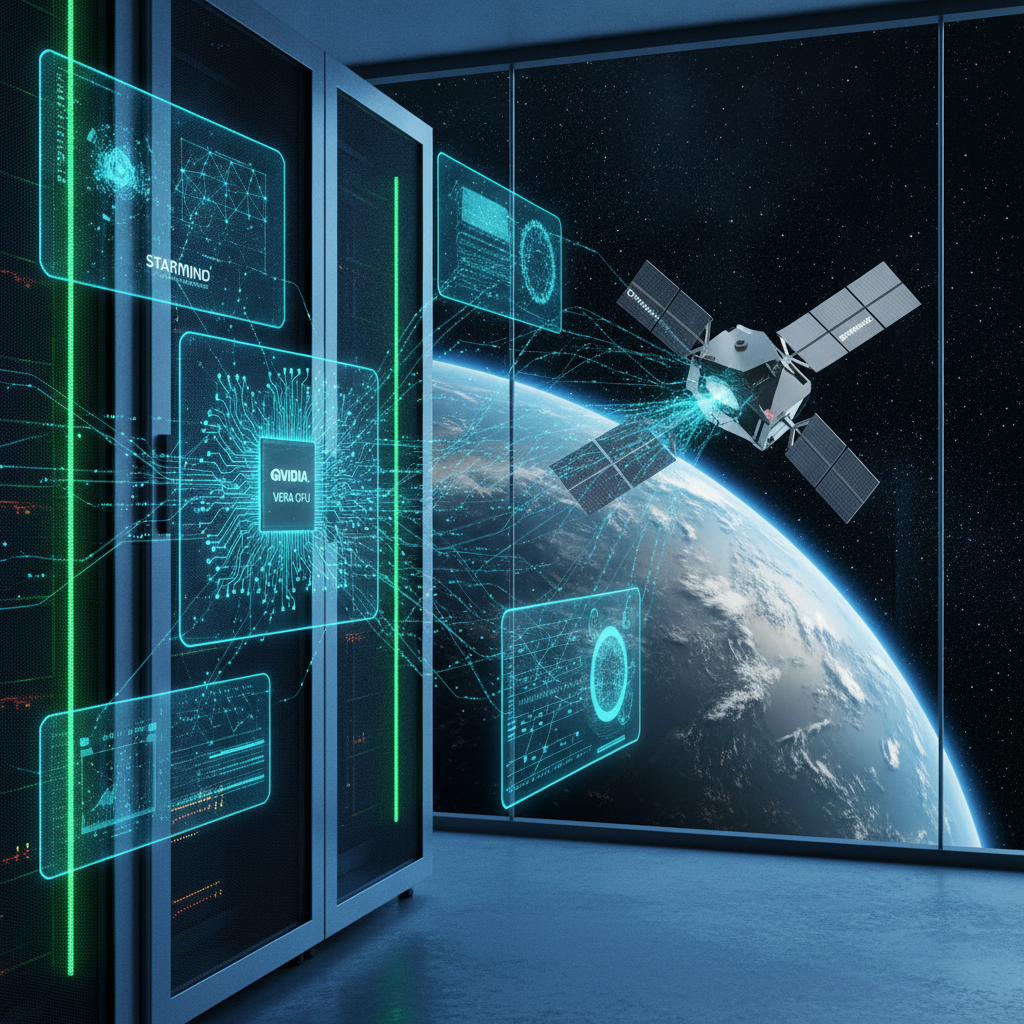
Elon Musk's SpaceXAI announces its selection of the new Nvidia Vera CPU to power Grok AI, both in Earth-based data centers and in Starmind satellites set for launch into space in 2027.
📌 Key Highlights:
- SpaceXAI will use standalone Nvidia Vera CPUs in its data centers to accelerate Grok's Agentic AI performance, reducing bottlenecks where GPUs await CPU processing.
- Additionally, a special space-optimized Vera Rubin NVL72 system will be deployed in Starmind satellites, scheduled for launch into orbit in Q4 2027.
- This move makes SpaceXAI the second major customer, after Meta, to adopt the Vera CPU, directly challenging the data center CPU market dominated by AMD and Intel.
Elon Musk's SpaceXAI announced a significant partnership with Nvidia, adopting the "Vera" CPU, their latest 88-core processor, for two primary applications: in Earth-based data centers and within the Starmind intelligent satellite project in space. This decision underscores confidence in Nvidia's architecture and marks another crucial step in the AI infrastructure competition.
🧠 Why the Vera CPU? Modern AI operations, especially for "Agentic AI" like Grok, don't solely rely on GPUs for processing. They also require CPUs for backend tasks such as calling various tools, querying databases, and data processing. These periods often cause expensive GPUs to idle, resulting in wasted cost. Nvidia claims the Vera CPU can perform these tasks up to 1.8 times faster than general x86 CPUs, allowing GPUs to operate at full efficiency and continuously.
🛰️ Towards AI Technology in Space! This partnership isn't limited to Earth. Elon Musk confirmed via X that Starmind satellites, equipped with a special Vera Rubin NVL72 system optimized for zero-gravity conditions, will be launched into orbit during Q4 2027, with significant expansion planned for 2028. This space-grade system required a complete redesign to withstand radiation, launch vibrations, and, crucially, a cooling system that uses radiators instead of the liquid cooling found in data centers.
⚔️ The CPU Battle Intensifies! SpaceXAI's adoption of the Vera CPU makes them the second hyperscaler customer, after Meta, to choose this architecture. This marks Nvidia's direct foray into the server CPU market to contend for market share from incumbents like AMD EPYC and Intel Xeon. However, AMD has countered, stating that its upcoming Zen 6 "Venice" CPU will offer 3.3 times higher rack-level performance than Vera, demonstrating that the AI hardware competition remains fierce with much more to anticipate.
💬 What do you think? Will Nvidia's aggressive push into the server CPU market shake up incumbents like Intel and AMD? And what benefits do you foresee from processing AI in space? Share your thoughts in the comments!