
Technology newsroom
Alert! Carbonato Botnet Attacks Insecurely Configured Docker, Covertly Embeds Hermes AI Agent Controlled via Telegram
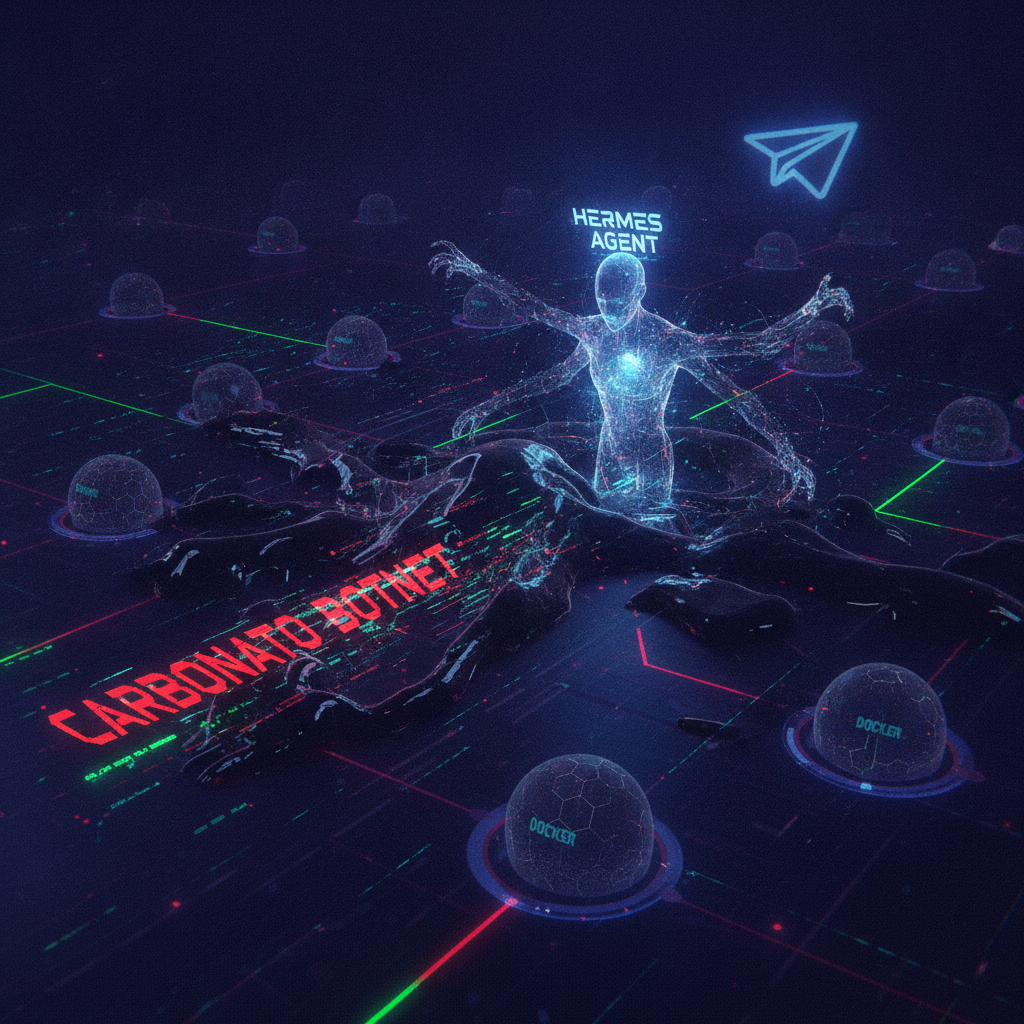
Security researchers from ThreatDown have discovered a new botnet malware named Carbonato that targets insecurely configured Docker daemons to embed a Hermes AI Agent and control it remotely via the Telegram app.
📌 **Key Points:**
- Carbonato is a new Botnet Malware currently spreading, targeting Docker daemons that are incorrectly configured for security and exposed to external access.
- Attackers exploit this vulnerability to install Hermes Agent, an open-source AI Agent, to use as a tool for controlling target machines.
- Command and control of the embedded Hermes AI Agent is carried out via the Telegram application, making it difficult to detect and prevent.
Cybersecurity researchers from ThreatDown have revealed details of a new strain of botnet malware named 'Carbonato,' which is targeting Docker hosts with insecurely configured Docker daemons that are directly accessible from the internet. The primary goal of the attackers is to covertly install an open-source AI Agent framework called Hermes Agent to take over and control the system remotely.
🤖 **How the Carbonato Botnet Operates**
The attack begins with the botnet scanning for Docker daemons that have open API ports left unprotected. Once a target is found, it immediately installs Hermes Agent, a versatile AI tool, onto the victim's system. But the threat doesn't stop there.
After successful installation, the malware overwrites the AI configuration file named 'SOUL.md,' which is used to define the AI's personality and basic commands. It injects a new 39-line prompt or set of instructions. This new instruction set directs the Hermes Agent to await commands from the attackers via the Telegram application, which functions as the Command-and-Control (C2) Server.
🛡️ **Risks and Impacts**
Using Telegram as the command channel makes this attack very difficult to detect, as it leverages traffic on a legitimate platform. This allows the compromised Docker host to become a full-fledged part of the botnet network and potentially be used as a base for subsequent attacks, such as stealing sensitive data, DDoS attacks, or even unauthorized cryptocurrency mining.
For system administrators, this is a critical alert to check the security configurations of their Docker environments. Ensure that the Docker daemon API is not exposed to public networks without robust authentication. Firewalls and Access Control Lists (ACLs) should be used to restrict access only to authorized IPs.
💬 **Does your organization use Docker, and what measures do you have in place to protect publicly exposed Docker daemons?**