
Technology newsroom
Intel Unveils High-Power AI GPU D-Series! Packs 480GB LPDDR5X RAM, 1.3 PFLOPS in a Single PCIe Card 🚀
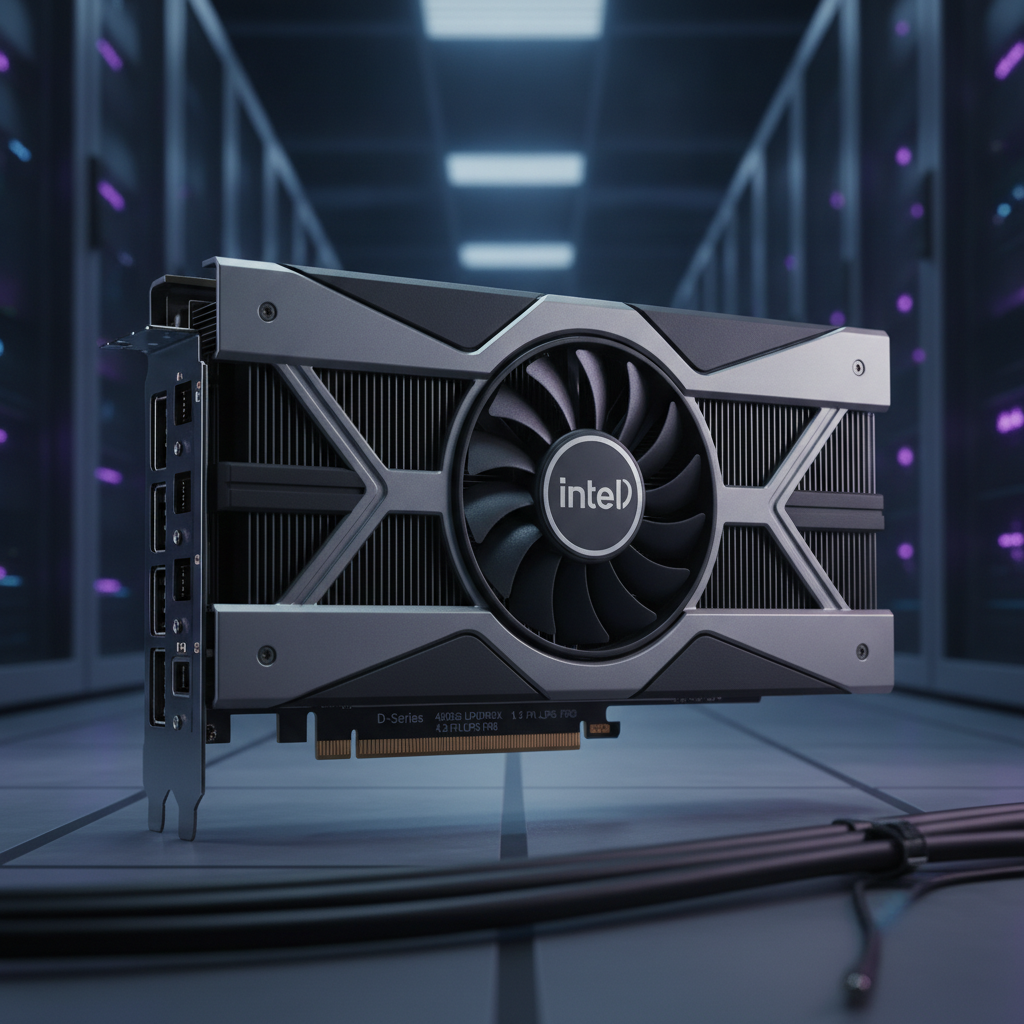
Intel has launched its GPU D-Series server processor card, featuring Xe3P architecture, packed with up to 480GB of LPDDR5X memory, and delivering 1.3 PFLOPS (FP8) of AI processing power in a 350W PCIe card format.
📌 Key Highlights:
- Intel launched its new server GPU, the Intel GPU D-Series, built on Xe3P architecture.
- Features a massive 480GB of LPDDR5X memory and high bandwidth up to 1.5TB/s.
- Delivers up to 1.3 Petaflops (FP8) of processing power in a 350W air-cooled PCIe card format.
At the recent OCP Global Summit, Intel created a buzz by officially launching its new product, the Intel GPU D-series, previously known by the codename "Crescent Island." This processor card is built on the Xe3P architecture, specifically designed to support high-level processing tasks.
The most prominent feature of this card series is its impressive memory specifications. It comes with up to 480GB of LPDDR5X, an enormous amount for a single form factor card, complemented by memory bandwidth of up to 1.5TB/s. This enables rapid handling of large AI models and complex datasets without frequently relying on the system's main memory. Notably, the 480GB memory variant will be produced by Intel's partners.
🚀 Petaflops-Level Processing Power
In terms of computational performance, the Intel GPU D-series boasts processing capabilities of up to 1.3 Petaflops for FP8 calculations, a data format widely used in modern AI applications. This makes the card ideally suited for AI tasks, including both training and inference, that demand maximum speed and efficiency.
💨 High Performance in a Familiar Form Factor
Another impressive aspect is Intel's ability to integrate all this technology into a single-slot, air-cooled PCIe card with a Thermal Design Power (TDP) of just 350W. This simplifies installation and use in standard servers without requiring complex liquid cooling systems, posing a direct challenge to competitors in the data center compute card market.
💬 How much do you think the arrival of Intel GPU D-Series with such massive memory will transform the AI and HPC industries?