
Microsoft Reportedly Targets 2027 to Move Windows Wi-Fi Drivers Out of the Kernel
Technology news
According to Help Desk Geek, citing reporting from a Microsoft Ignite 2026 session, Microsoft reportedly plans to shift Windows 11 Wi-Fi drivers from the kernel to user mode by 2027 to mitigate system crashes. No configuration changes apply to PCs today.
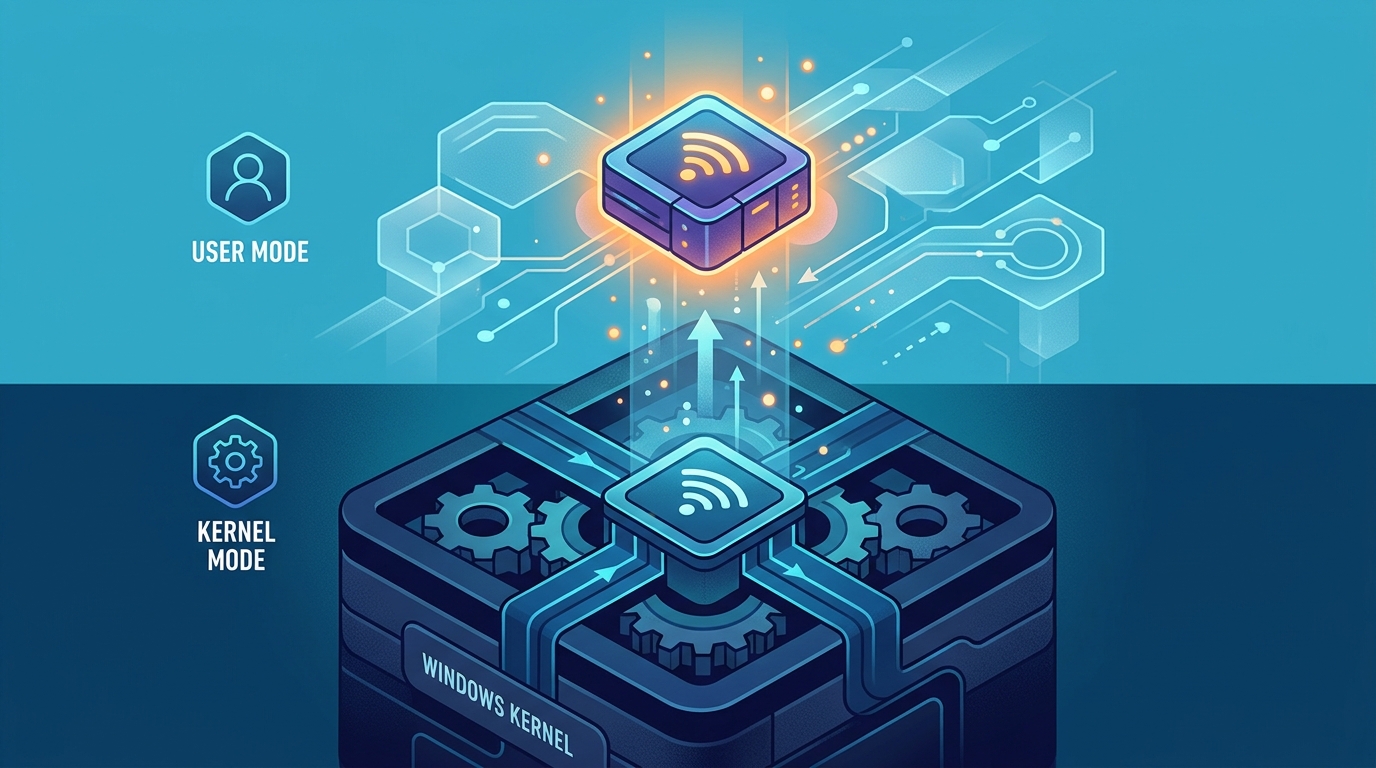
The Reported 2027 Plan for Windows Wi-Fi Drivers
On November 23, 2026, Windows Latest reported that Microsoft is planning to transition Windows 11 Wi-Fi drivers out of kernel mode and into user mode, targeting a 2027 rollout. The report originates from a session at Microsoft Ignite 2026 with remarks attributed to Microsoft product manager Mehmet Kucukgoz, with additional coverage from NotebookCheck, PC Games Hardware, and Cybernews.
Because this plan was outlined during a technical conference presentation rather than an official Microsoft Learn page or formal company blog post, it represents credible press reporting on a long-term direction rather than a final release announcement. At present, nothing changes on end-user PCs, and there are no procedures, builds, or settings to install or enable.
Technical Context and the UMDF Framework
Under current Windows 11 architecture (including version 26H2), many Wi-Fi stacks rely directly on kernel-mode components—the most privileged layer of the operating system. Consequently, an unhandled fault in a Wi-Fi driver can cause a full Blue Screen of Death (BSOD). Transitioning eligible drivers to user mode is intended to contain failures within an isolated process so that a network fault may drop the connection or restart the Wi-Fi stack rather than crashing Windows entirely. However, as Microsoft's User-Mode Driver Framework (UMDF) documentation notes, user-mode drivers still interact with kernel components; therefore, process containment remains a design goal rather than an absolute guarantee that the system will never be affected.
This architectural transition is tied to Microsoft's Driver Quality Initiative (DQI). The technical feature being developed is Direct Memory Access (DMA) support within UMDF, aimed at allowing high-throughput devices like Wi-Fi network cards to operate in user space without performance degradation. For adapters that may need to remain in kernel mode, proposed mitigations reportedly include compiler protections, driver isolation, and DMA remapping.
Troubleshooting Wi-Fi Failures Today
Because the proposed architecture is targeted for 2027 and provides no immediate configuration paths, users experiencing Wi-Fi crashes today must rely on existing troubleshooting procedures outlined by Help Desk Geek:
- Check crash logs: Press
Win + R, executeperfmon /relto open Reliability Monitor, and verify whether recorded critical events point to the Wi-Fi driver binary. - Identify driver details: Open Device Manager by running
devmgmt.msc, expand Network adapters, right-click the relevant Wi-Fi adapter, and review Properties > Driver to note the current version and vendor. - Update the driver: Download the newest driver package directly from the device or laptop manufacturer's support portal, or check Settings > Windows Update > Advanced options > Optional updates for available releases.
- Workaround alternatives: If crashes persist, using a Cat6 Ethernet cable avoids active Wi-Fi usage during diagnosis, though a faulty driver may still require vendor-supported removal. Alternatively, an external USB Wi-Fi adapter with maintained drivers can serve as a workaround, provided hardware and OS compatibility are confirmed.
Reported Limitations and Unverified Benchmarks
Multiple caveats and operational boundaries remain concerning the reported 2027 initiative:
- Unspecified scope: The reporting does not identify specific Windows builds, supported chipsets, wireless adapters, or hardware vendor commitments, nor does it outline an opt-out or rollback mechanism.
- Kernel exceptions: Microsoft reportedly acknowledged that certain Wi-Fi drivers may remain in kernel mode, meaning user-mode containment will not apply to all hardware.
- Unverified claims: The assertion that user-mode Wi-Fi drivers will operate with "no performance penalty" originates solely from Microsoft's presentation; no independent benchmarks or battery-life impact evaluations are available in current coverage.
- UMDF adoption: While Microsoft cited existing UMDF support across certain USB, Ethernet, sensor, and fingerprint device stacks, that does not mean every driver in those hardware categories currently runs in user space.
Source: Help Desk Geek (https://helpdeskgeek.com/microsoft-windows-wi-fi-drivers-out-of-kernel-2027/)