
3D Printer Build Plate Care: How to Restore Adhesion and Prevent Damage
Technology news
Based on hands-on findings from How-To Geek, learn the recommended steps to clean FDM 3D printer build plates, restore first-layer adhesion, and prevent bed gouging.
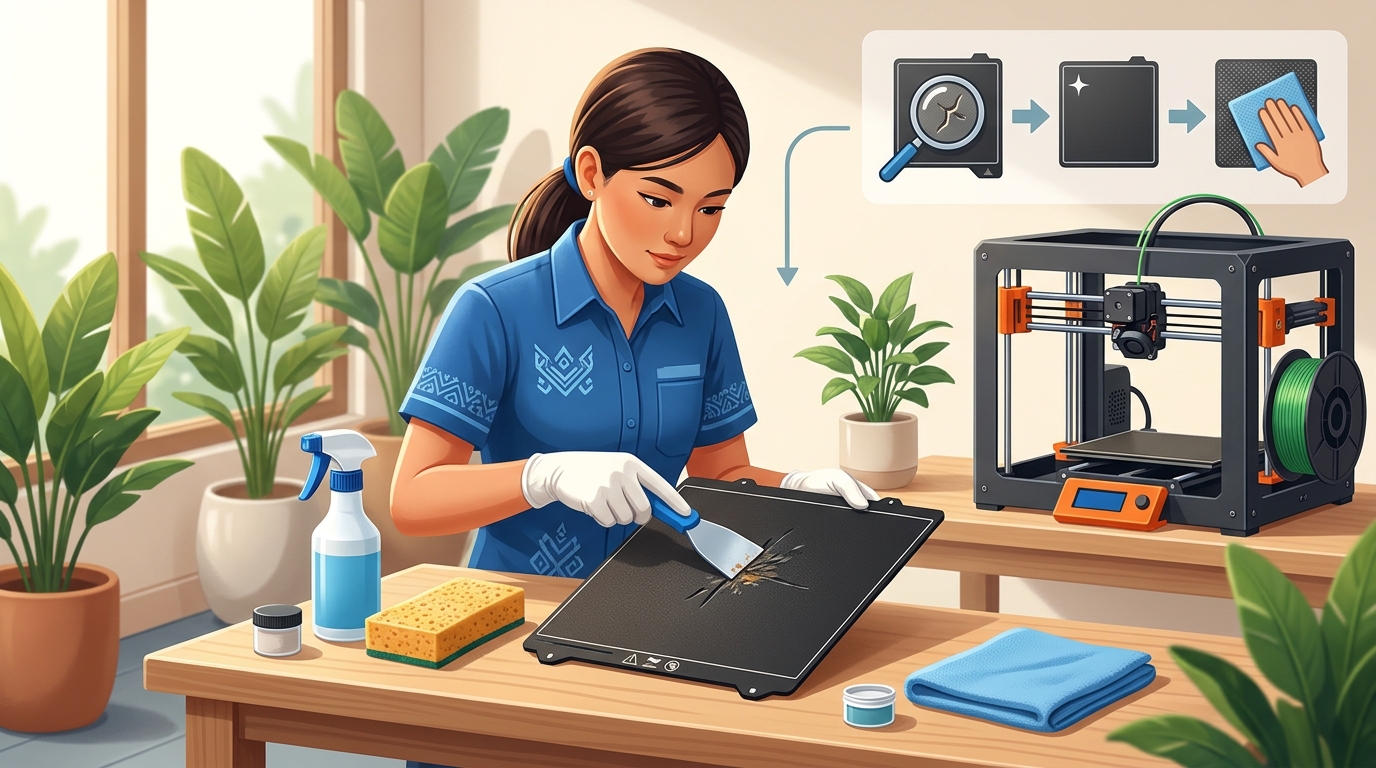
Restoring First-Layer Adhesion on 3D Printer Beds
In FDM 3D printing, the build plate provides the critical foundation for the entire model. Poor bed maintenance often results in warped model bases or failed prints turning into loose spaghetti filament. Writing for How-To Geek, Sydney Butler highlighted that build plate issues frequently stem from degraded adhesives or surface contamination. Rather than continually applying layers of hairspray or glue sticks, properly cleaning the plate restores the surface's natural bonding properties.
Step-by-Step Build Plate Cleaning Procedure
When a build plate unexpectedly loses adhesion without obvious visual cues, Butler outlined the following maintenance procedure:
- Remove the build plate from the 3D printer.
- Wash the plate thoroughly using standard soap and warm water to strip away oils and residue.
- Rinse completely with clean water and let the plate dry thoroughly.
- Optional step: Wipe the surface with 99% isopropyl alcohol (IPA) as a final treatment.
- Reseat the clean plate onto the heated bed. According to Butler, this process typically yields several trouble-free prints before first-layer adhesion issues resurface.
Safe Part Removal and Hardware Applicability
Improper removal of stuck prints can permanently ruin build plates. Butler previously damaged surfaces through scraper slips and by placing a plate into a kitchen oven to soften stuck filament, which caused the surface coating to bubble and melt despite running at supposed safe temperatures. To avoid bed gouging, Butler advises using scrapers designed with fixed angles—such as handle designs provided by Elegoo or Bambu where the user prints the handle to hold the metal blade at a shallow, non-gouging angle beneath stuck prints.
Material Cautions and Practical Limits
These practices are based directly on Butler's personal experience running first- and second-generation Elegoo Centauri Carbon printers and an earlier Creality K1 Max. While washing restored adhesion on these factory plates, adhesives like hairspray or glue eventually degrade over repeated cycles and actively hinder adhesion. Furthermore, never place coated build plates in a domestic oven to loosen stuck prints. Cleaning addresses surface adhesion issues but cannot compensate for improper bed leveling, incorrect Z-offset, or misconfigured bed temperatures.
Source: howtogeek.com (https://www.howtogeek.com/my-biggest-3d-printing-mistake-was-neglecting-my-build-plate-heres-what-i-learned/)