
Technology newsroom
Microsoft Unveils Maia 300, 3rd Gen AI Chip! Chiplet Architecture 7x More Powerful, More Power-Efficient 🚀
Microsoft unveils its third-generation AI chip, Maia 300, utilizing Chiplet architecture to boost token generation performance by 7x and achieve 40% more power efficiency than GPUs, with new HBM4 and MXFP4 technologies, set for real-world deployment in 2027.
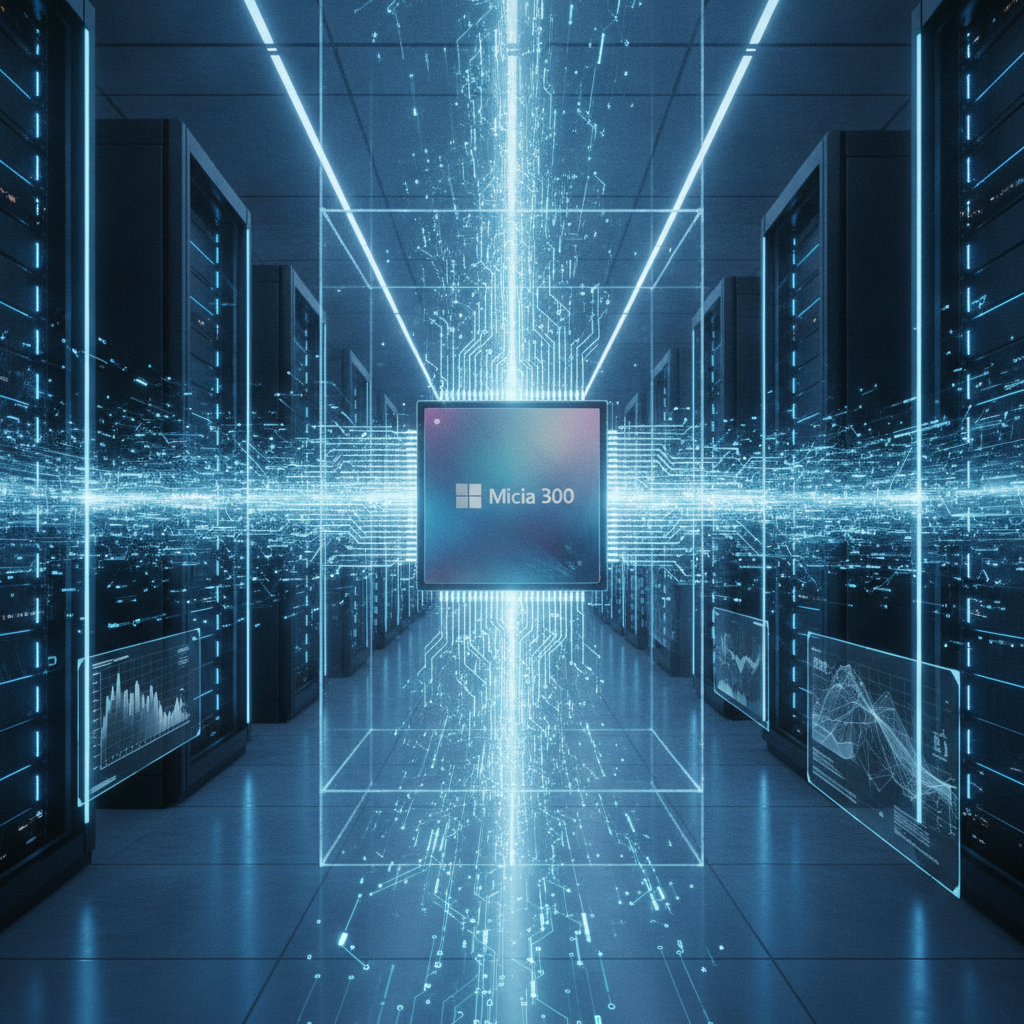
📌 Key Highlights:
- Microsoft unveils Maia 300, its third-generation AI processor, building on the success of Maia 100 and 200.
- 7 times higher token generation performance compared to its predecessor, and 40% more power-efficient than GPUs.
- Packed with new technologies including Chiplet architecture, MXFP4 data format, and the latest HBM4 memory.
Microsoft has officially announced the launch of Maia 300, its third-generation AI accelerator chip. This development continues from Maia 100, introduced in 2023, and Maia 200, launched in early 2026, both of which are currently in use in various company services like Copilot.
Maia 300 represents a significant upgrade from Maia 200, offering 7 times greater token generation capability (when comparing entire racks). It also excels in power efficiency, achieving 40% better token-per-megawatt performance than general GPUs.
🏛️ Advanced Architecture
Microsoft has further developed its Software Defined Locally Accessed Dataflow Architecture (SDLA), which separates the Control Path from the Data Path, allowing software to manage data placement with maximum efficiency. For Maia 300, a Chiplet architecture has been adopted, connecting multiple chips together with non-uniform memory access (NUMA) memory placed closest to the processing units. This minimizes data movement distance, addressing the needs of AI models with long contexts and complex reasoning requirements.
✨ Noteworthy New Technologies
Maia 300 features a new data format called MXFP4, a low-precision format that reduces memory usage and data movement, enabling larger models with longer contexts to run. Furthermore, it switches to the latest HBM4 memory, dramatically increasing bandwidth to 18 TB/s, which is 2.5 times higher than HBM3E (7.1 TB/s).
🔋 Superior Performance Per Watt
Thanks to various advancements, particularly in power efficiency, Microsoft can double the density of Maia 300 chips in a rack, from 48 to 96 units, while maintaining the same 167 kW power consumption. This results in an overall rack performance increase of 7 times and a 2.5 times better performance per watt compared to Maia 200. Microsoft aims to commence real-world deployment of Maia 300 in 2027.
💬 How much do you think Microsoft's AI chip will challenge NVIDIA's dominance in the Data Center market?