
How to Safely Share Your Living Space with a 3D Printer Based on Science and NIOSH Guidance
Technology news
Reporting by How-To Geek reviews early research on FDM 3D printer emissions (PLA and ABS) affecting airway cells in vitro, detailing practical NIOSH precautions regarding ventilation, room placement, and HEPA filtration.
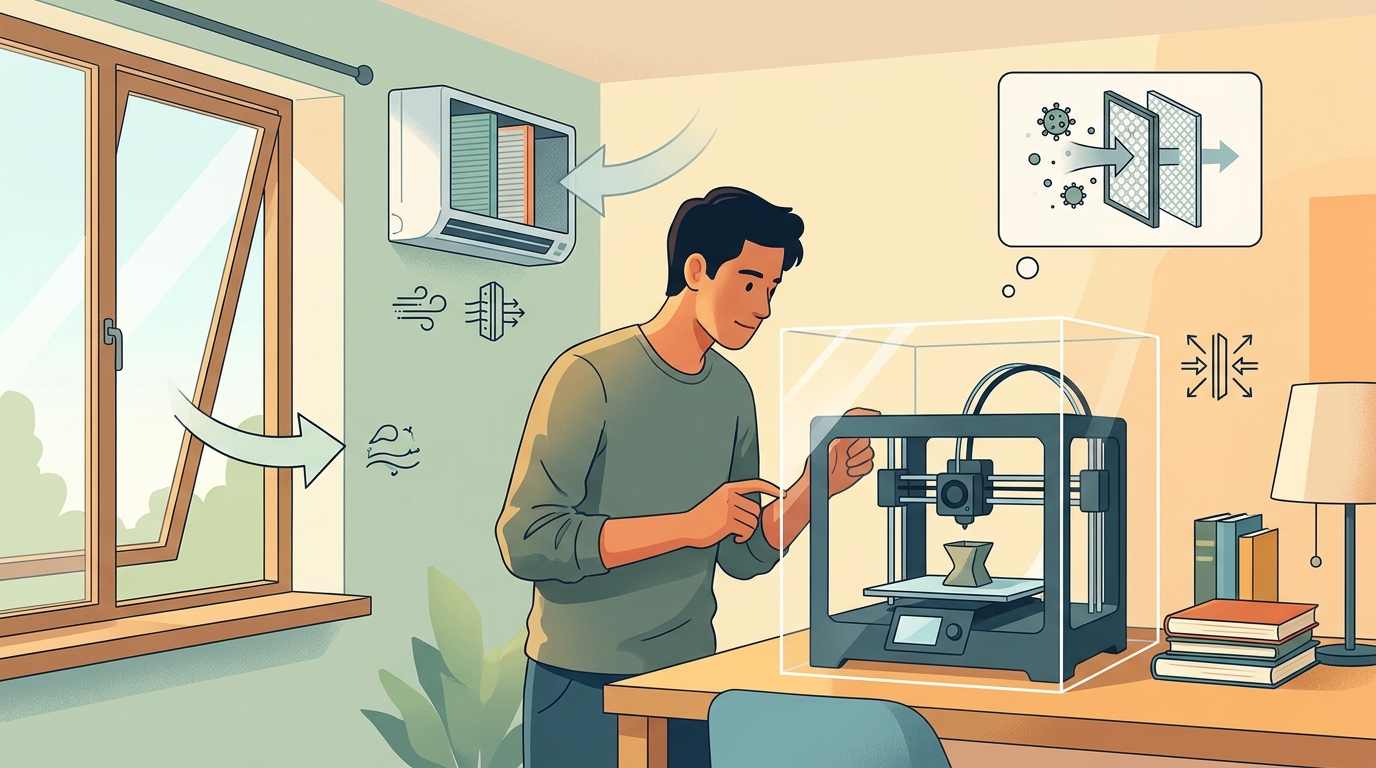
Early In Vitro Research Links 3D Printer Emissions to Airway Cell Harm
With consumer 3D printers entering homes, offices, and classrooms over roughly the past decade since the 2012 launch of 3D Systems' Cube, long-term health consequences remain unknown. Reporting by How-To Geek highlights an early 2024 study cataloged in the National Library of Medicine evaluating the effects of filament deposition modeling (FDM) printer emissions on airway epithelial cells cultured in vitro using PLA and ABS materials.
The study suggests emissions from both filament types are harmful to airway cells in differing manners. ABS filaments tested higher for copper and cobalt, required higher printing temperatures, and produced significantly higher total emissions, showing an increased tendency toward oxidative stress in cultured cells. In contrast, PLA filaments contained more nickel and produced a higher concentration of smaller particles, showing a greater tendency to disrupt cellular lipid processing.
Practical Space and Ventilation Steps Recommended by NIOSH
To mitigate potential exposure to airborne emissions when sharing spaces with 3D printers, the U.S. National Institute for Occupational Safety and Health (NIOSH) has outlined actionable safety measures:
- Relocate to an isolated space: Avoid placing 3D printers in frequently occupied living zones or directly beside work desks; select a dedicated room with low occupancy.
- Choose lower print temperatures: Keep nozzle and bed temperatures at the lowest effective levels to reduce thermal emissions.
- Utilize enclosures or fume hoods: Position printers under fume hoods or operate enclosed 3D printers (such as the Bambu Lab P1S or Prusa Core One) equipped with an exhaust to direct emissions away through a single port rather than an open print bed.
- Apply HEPA filtration and ensure rapid air exchange: Install HEPA filters where feasible and ensure the operating room achieves six complete air changes per hour.
Applicable Scenarios and Handling Requirements for Resin Printers
These exposure-reduction methods apply to hobbyists, makerspaces, and schools operating FDM equipment. Stricter handling applies to stereolithography or resin 3D printers, which require personal protective equipment (PPE), specifically gloves and respirators, to handle hazardous liquid resins safely. Users operating printers within household environments can also supplement their setup with dedicated room air purifiers and air quality monitors to track volatile organic compound (VOC) levels.
Study Constraints and Unexamined Testing Variables
Findings reported from the 2024 study carry notable scientific constraints. Tests were conducted strictly in vitro on isolated cells, not on human subjects, across two 3-hour print runs with only 12 individual samples per test group. The research did not account for differences across filament brands, printer hardware models, multi-head configurations, or broader VOC risks. Given that comprehensive long-term data will take decades to establish, NIOSH recommendations represent risk-mitigation measures rather than definitive safety guarantees.
Source: How-To Geek (https://www.howtogeek.com/is-it-safe-to-share-your-living-space-with-a-3d-printer/)